Sound familiar?Shelburne
- The call
- The opener groans on the way up and the door slams the last foot on the way down, hard enough to rattle the windows. The motor is the same one it always was; something in the springs has stopped doing its share.
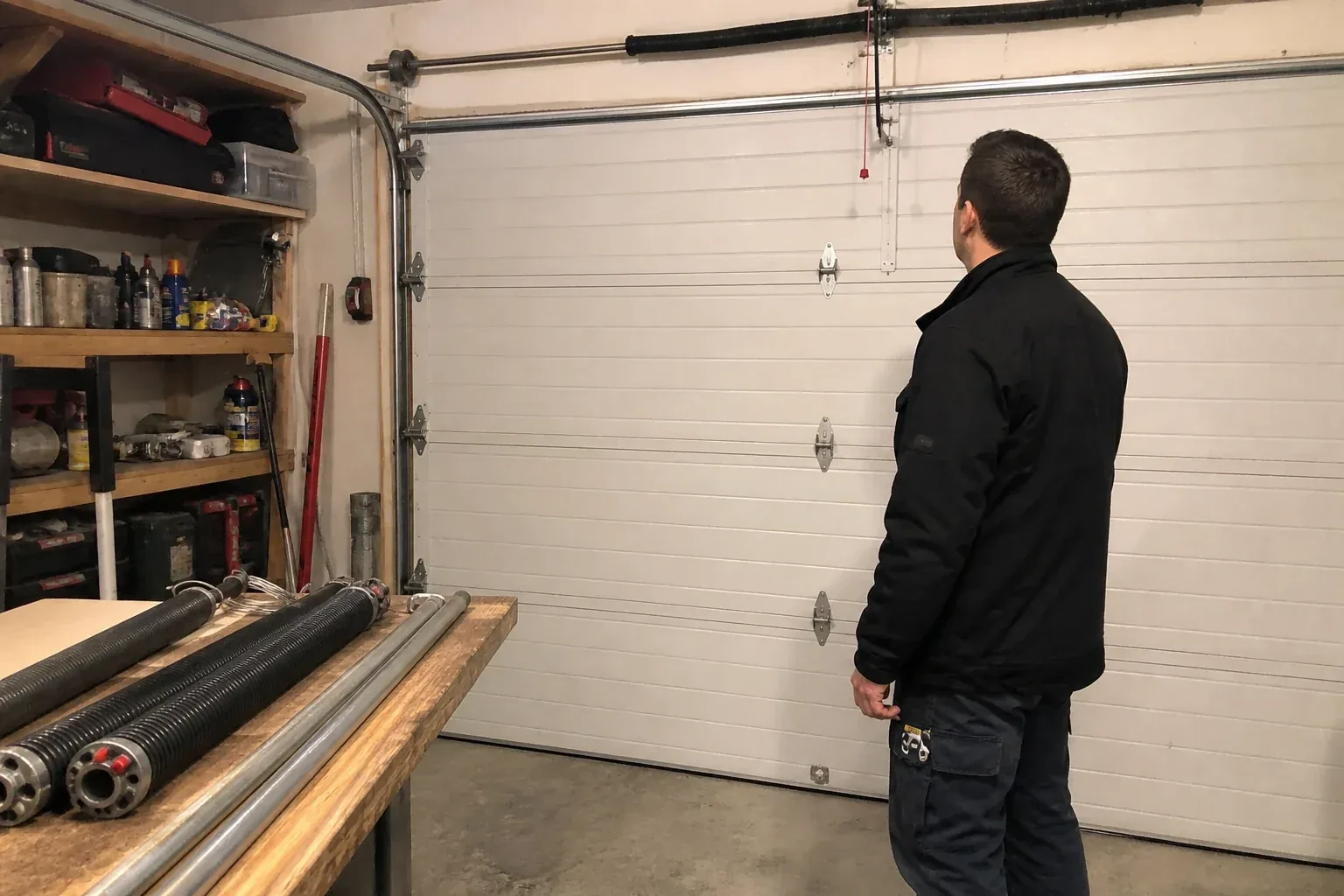
Choosing the right spring is a matter of weight, not colour. Extension springs are rated for the weight they are meant to lift, and the correct pair for your door is found by weighing the door itself with the opener released, then checking that figure against the wire size, coil diameter and length of the old springs. Paint colour on the end coil is only a hint; older springs fade, get overpainted or were never quite right to begin with. A pair matched to the measured weight gives a door that holds at half height and lifts with one hand, and an opener that works lightly.
Sound familiar?Shelburne
Extension Spring Replacement · Shelburne
Scene 1
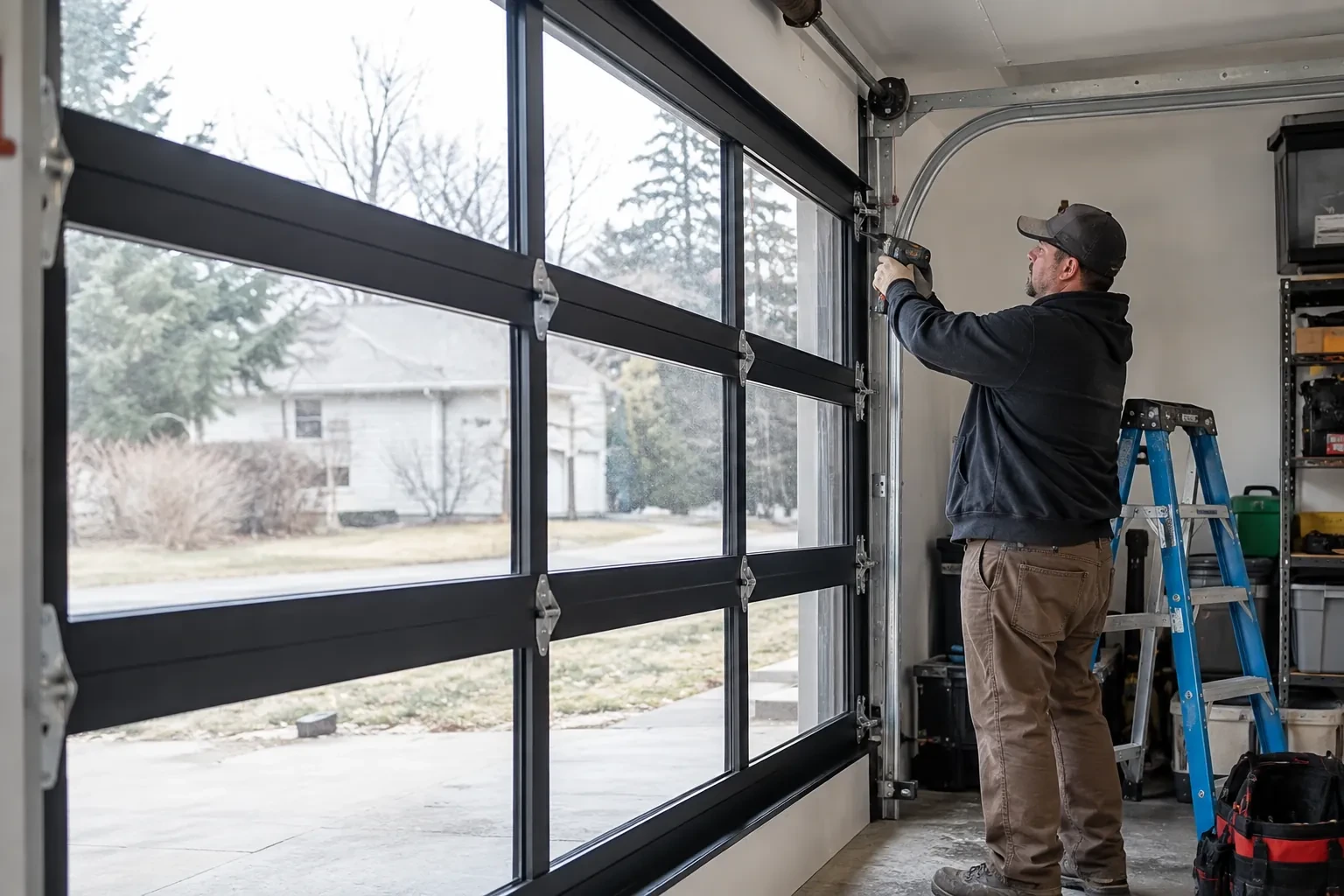
Extension springs pull against whatever holds their back end, usually an angle-iron hanger bolted to the rear track support or lag-screwed into a ceiling joist. The technician checks that this anchor is tight, that the lag screws bite into wood rather than drywall or a split joist, and that the hanger has not bent under years of load. The bracket that carries the fixed pulley at the front of the track is checked the same way, along with the bottom brackets on the door that the lift cables pull on. An anchor that has loosened lets the spring's geometry drift, which is one reason a door slowly becomes uneven.
Scene 2
The opener is the last thing touched. Once the door balances by hand, the trolley is reconnected and the door run through several full cycles under power while the technician watches the cables ride their pulleys and the springs stretch evenly. Because the door is now lighter to move than it was on tired springs, the opener's force and travel settings are reset to suit; a force setting left high would push a balanced door too hard. Then the reversal checks are done in front of you: a block laid flat under the centre of the door, which the door must touch and reverse from, and a hand passed through the photo-eye beam while the door closes.
Scene 3
Your door now has a cable running through the middle of each spring, anchored at the back hanger and at the front of the track. It carries no meaningful load while the springs work, though a trace of slack as the door cycles is normal. Its job begins only if a spring ever breaks, when it holds the pieces on the cable instead of letting them fly. It should not be removed, used to hang anything, or tied back to the wall. If it ever looks badly slack, frayed or pulled from its anchor, call to have it corrected promptly rather than waiting for a routine visit. A home inspector looks for this cable when a house is sold.
What shapes the quoteHockley Valley Garage Door Experts
FeesSame any hour
Not in a useful way. The aim is a spring that matches the door's weight, so the door holds still wherever you leave it. A spring rated above that weight pulls the door up on its own, makes it hard to close, and leans on the opener to hold it down. A spring rated below lets it sink. Matched springs, set to the same hook position, give the light, even feel you want.
The technician releases the opener, opens the door fully and clamps it so the springs go slack, then inspects springs, pulleys, cables, hangers and containment cables and weighs the door. The old springs come off, a matched pair goes on with containment cables through them, the lift cables are routed over the pulleys and the two sides are set to matching hook positions. The door is balanced by hand, the opener reconnected and its reversing tested with you watching.
The door starts to feel heavier when lifted by hand and the opener sounds as though it is working harder. Released from the opener, the door sinks from halfway instead of holding. With the door open, gaps show between coils that used to sit tight together, or one spring hangs longer than the other. Rust bloom on the coils and a squeal from a pulley round out the list. Any of these is a good time to call.
DufferinOntario
Extension Spring Replacement · Orangeville, Amaranth, East Garafraxa, Grand Valley, Melancthon, Mono, Southgate, Starrview Acres
Every square is one home in a hundred.
On-site assessment
The door climbs with the left corner ahead of the right, then twists as it turns into the ceiling track.
(226) 917-2730, open 24/7.
On-site assessment preferred · (226) 917-2730, open 24/7