Skip to content
HockleyValley Garage Door ExpertsOpen 24/7 (226) 917-2730
Illustrative garage doors scene — Orangeville

Openers · Orangeville

Emergency Release Repair

The power went out in the middle of an ice storm, the car is inside, and when you reach up for the red handle there is nothing there. A frayed stub of cord hangs from the trolley, well above your fingertips, and the door sits shut.
In plain words

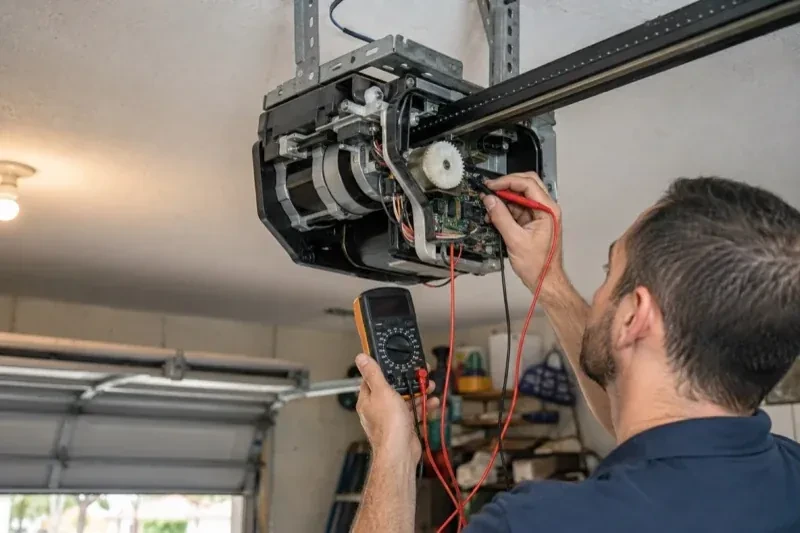
Emergency release repair puts the manual disconnect on an opener into working order. That disconnect is the red handle on a cord below the rail, the spring-loaded lever it pulls, and the trolley that lets go of the door when the lever is thrown and grips it again when the two are brought back together. When any of those parts is missing, bent, worn or set at the wrong height, moving the door by hand in an outage becomes a struggle and reconnecting it afterwards a puzzle. The technician fits parts made for that opener, sets the handle where it belongs, and proves the sequence from disconnect to reconnect.

Sound familiar?Orangeville

The call
The power went out in the middle of an ice storm, the car is inside, and when you reach up for the red handle there is nothing there. A frayed stub of cord hangs from the trolley, well above your fingertips, and the door sits shut.

NextHow the visit goes

Emergency Release Repair · Orangeville

How the visit goes

Illustrative garage doors scene — Orangeville
  1. Scene 1

    How the door behaves on its own

    The release is then pulled with the door closed and the door is lifted by hand, using the door's own handle or a gripping point clear of the section joints. This is the balance test, and it decides the order of the work. A door that rises with modest effort, holds at about a metre and stays fully open is ready for release work. A door that feels heavy, sinks back or springs upward is telling the technician that the counterbalance needs attention first, and the release is left disconnected until that is done. Manufacturers and the industry checklist both put this test ahead of any further use of the release.

  2. Scene 2

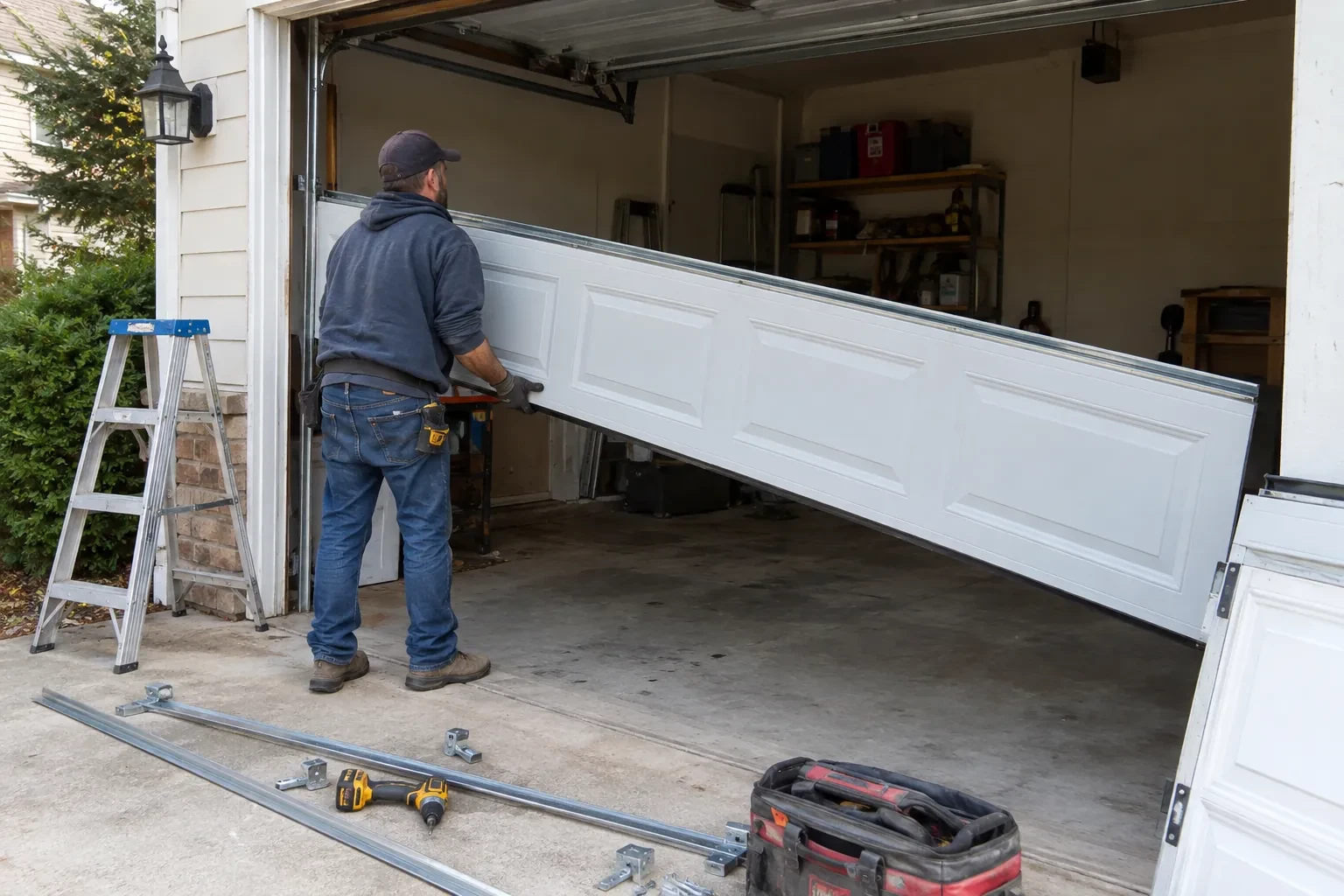
    Replacing the trolley or carriage

    Latch teeth that have worn round, a cracked trolley body or a carriage bent when a door dropped onto it call for a new assembly. The technician slackens the drive, disconnects the arm from the door, slides the old trolley off the rail and fits the replacement that matches the opener's model and rail type, then reattaches the arm with new clevis pins and clips. The chain or belt is set to the correct tension, the trolley is run to the door and latched, and the opener is cycled until the technician is satisfied the connection is solid at both ends of travel. Old parts are shown to you before they leave.

  3. Scene 3

    The sequence, demonstrated on your own door

    Before leaving, the technician walks through the release with you rather than describing it. Door closed. Pull the handle straight down until the lever clicks over. Lift the door by its handle or a gripping point on the panel face, never at the joint between sections. Lower it the same way. To reconnect, pull the cord toward the opener, or simply run the opener, and listen for the trolley to click onto the carriage. Anyone in the house who might face a blackout with the car inside is welcome to try it while the technician is there.

In the van

  • 2x4 offcut for the reversal test
  • Trolley and carriage assembly
  • Chain or belt tension hardware
  • Dry lock lubricant and de-icer
  • Rope and red handle kit

What shapes the quoteHockley Valley Garage Door Experts

Time of the call
A weekday daytime visit and an evening, weekend or holiday one cost the same amount for freeing or repairing an emergency release. The exact figure is confirmed once the technician has seen the trolley, the cord or lever, and how the door was left.
Damage from a door that dropped
A release pulled on an unbalanced open door can bend the arm, the carriage, a bracket or a panel. Anything that took the impact is listed on its own once it has been seen.
Ceiling height and access
A standard garage puts the trolley in easy reach from a step ladder. High ceilings, a storage loft, a high-lift track or a car that cannot be moved add setup time.

FeesSame any hour

Have it ready

Before you call · 0 / 3

(226) 917-2730

What people ask us

What exactly is the emergency release on a garage door opener?

It is the manual disconnect between the opener and the door: a red handle on a cord below the rail, connected to a lever on the trolley. Pull it and the trolley lets go of the door so you can move the door by hand, for instance during a power outage. Push the lever back, or run the opener, and the two reconnect. It is required on residential openers, coloured red so it stands out from everything else overhead.

I pulled the release and the door was very heavy. Is the release broken?

The release did its job; the weight is the door telling you its springs are no longer carrying it. A balanced door lifts with modest effort and holds still at about a metre. A heavy one needs the counterbalance looked at, which is work with winding bars for a technician trained for tensioned hardware. During the visit the door side is corrected first, then the release is put back into use on a door that lifts as it should.

Why should the door be closed before I pull the handle?

Because once the trolley lets go, the door is held only by its springs. A well-balanced door will stay put wherever it is, but a door whose springs are tired can drop, and one that is over-tensioned can rise on its own. Even with the door already on the floor it can still move unexpectedly, so keep the opening clear whenever the release is pulled. The industry checklist and opener makers give the same instruction: disconnect with the door fully closed.

Orangevilleinformation

DufferinOntario

Town
Orangeville, Dufferin
In business
32 years
Hours
Open 24/7
Nights, weekends and holidays, same fees
Visits
On-site assessment preferred. Request a visit or call.

2021 census: what it means at the door

Every square is one home in a hundred.

  • 42 in 100 homes · mixed ages
  • About 42% of homes in Orangeville were built in 1980 or earlier, according to the 2021 Census.Where housing is mixed, so are garage sizes: single doors on older lots, double doors on infill and newer builds. Spring pairs, cable lengths and opener strength are all sized to the actual door, and we carry the range to cover whichever door is in front of us.
  • Single-detached houses make up about 60% of homes in Orangeville (2021 Census).A mixed neighbourhood is where weatherproofing varies most. A detached garage with an old, uneven apron needs a thicker bottom seal; a newer townhouse door mostly needs a cracked section of seal replaced. We look at how each door meets its floor and fit what closes the gap.

Source: Statistics Canada, Census Profile

Open Orangeville in Google Maps

On-site assessment

Request a visit.

The power went out in the middle of an ice storm, the car is inside, and when you reach up for the red handle there is nothing there.

(226) 917-2730, open 24/7.