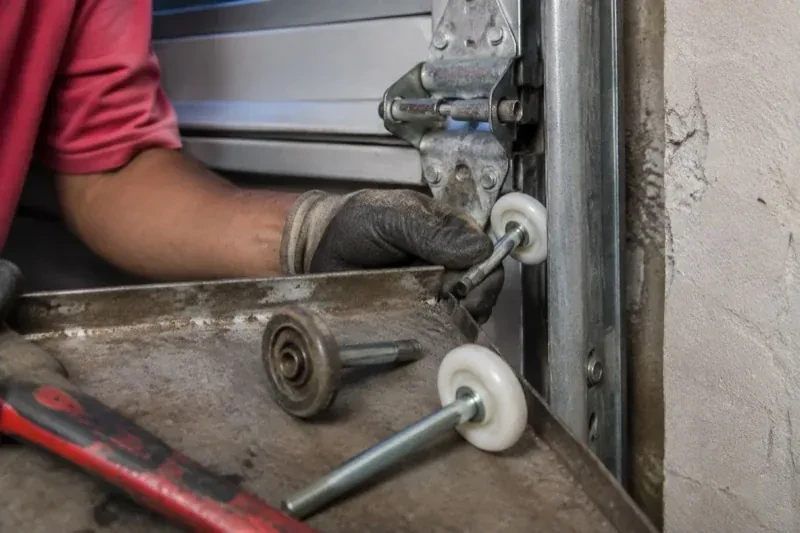
Sound familiar?Mono
- The call
- One side of the door sits higher than the other in the tracks, and a lift cable is hanging slack or has jumped off its drum. On a two-spring door this often follows one spring letting go while the other keeps pulling.
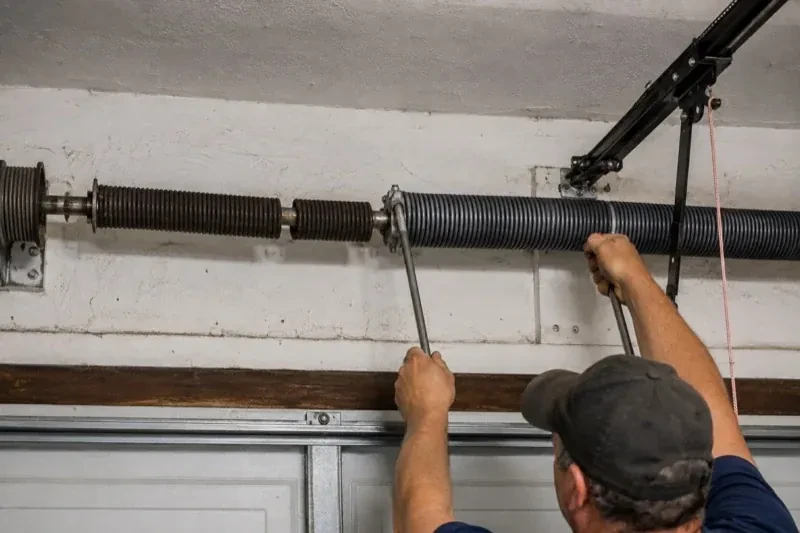
A spring that breaks with the car inside puts the whole morning on hold, and this service is designed to get that door working again in a single visit. The technician arrives with a range of spring sizes, secures the door so it cannot move, identifies exactly which spring the door needs, and installs and winds the replacement. Once the door balances by hand, the opener is reconnected and tested. Until then the safe approach is simple: leave the door where it is, keep clear of it, and share a photo of the spring area so the right parts arrive on the truck.
Sound familiar?Mono
Torsion Spring Replacement · Mono
Scene 1
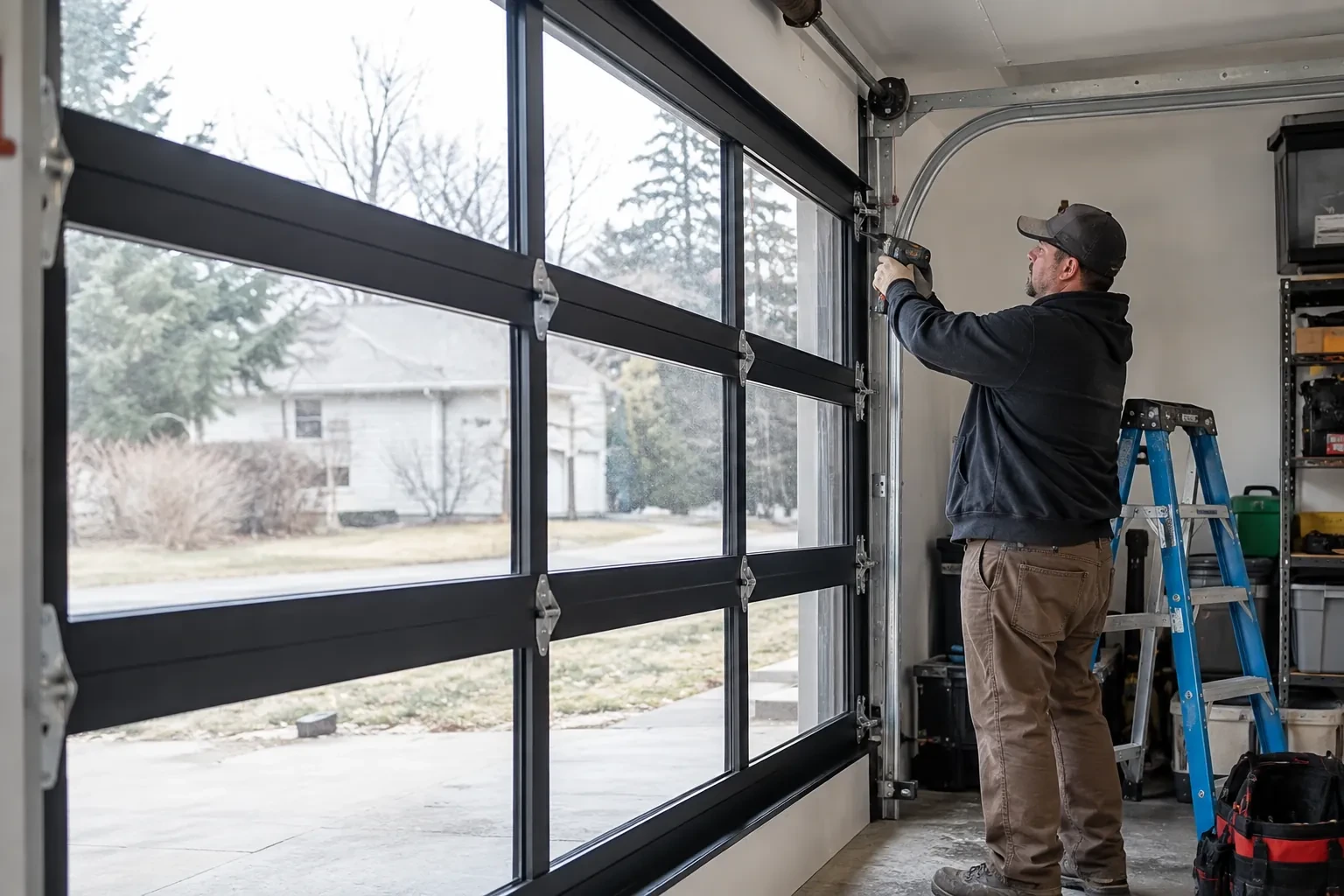
Before anything is measured or removed, the door and the opener are put into a controlled state. The opener is unplugged and the trolley released so the motor cannot move the door partway through the job. The door is brought fully closed, and locking pliers or clamps are set on the track just above a roller so the door stays down while spring tension changes. The technician clears the space beneath the shaft, checks that people and pets are out of the garage, and looks at where a vehicle sits so the ladder and winding position are safe.
Scene 2
With the door clamped and the opener disconnected, the technician releases any tension left in an intact spring, loosens the drum set screws and slides the drums inward, then removes the old spring from the shaft. Bearings are inspected while the shaft is free. The new spring goes on with its stationary cone bolted to the centre bracket and the winding cone facing the drum. Drums are refitted, cables seated, the shaft levelled and cable tension evened on both sides. Winding follows, then the set screws are seated and the clamps come off for a balance check. Each stage is done deliberately and in order.
Scene 3
A healthy spring system is quiet and even, so changes stand out. Listen for a new grinding or popping sound as the door moves, watch that both sides of the door rise together, and look at the cables for fraying or a loop that has left the drum groove. Rust streaks below the shaft, a door that takes noticeably more effort by hand, or an opener that starts to strain are all early indicators that something in the balance system wants attention. Catching these early keeps repairs small and lets the household plan a visit rather than face a stuck door.
What shapes the quoteHockley Valley Garage Door Experts
FeesSame any hour
Watch for a door that feels heavier by hand when the opener is released, an opener that strains or slows, a door that drops the last stretch rather than settling, or one that drifts down when stopped halfway. Visually, look for stretched gaps between coils, rust streaks or pitting on the steel, and any sag in the shaft. A balance check when you notice these lets you plan a replacement rather than react to one.
The shaft is free during a spring change, which makes it the natural time to renew the centre bearing and end bearings if they grind or wobble. Lift cables that show fraying or rust at the bottom brackets are replaced so the new spring pulls on sound steel, and cracked or worn drums are swapped. On older doors, a corroded centre bracket or loose lag bolts may also be addressed. Each item is shown and explained before it is added.
The centre bracket anchors the spring's reaction force to the framing above the door, so it has to be solid. If the header has split or softened, or the lag bolts have pulled, the technician can refasten into sound wood, add a reinforcing plate or replace the bracket before the new spring is wound. Dealing with this first keeps the shaft level and the spring pulling straight, which protects the bearings and the door.
DufferinOntario
Torsion Spring Replacement · Orangeville, Amaranth, East Garafraxa, Grand Valley, Melancthon, Shelburne, Southgate, Starrview Acres
Every square is one home in a hundred.
On-site assessment
The door starts to rise, gets about the height of your knee, then shudders and reverses.
(226) 917-2730, open 24/7.
On-site assessment preferred · (226) 917-2730, open 24/7