Skip to content
HockleyValley Garage Door ExpertsOpen 24/7 (226) 917-2730
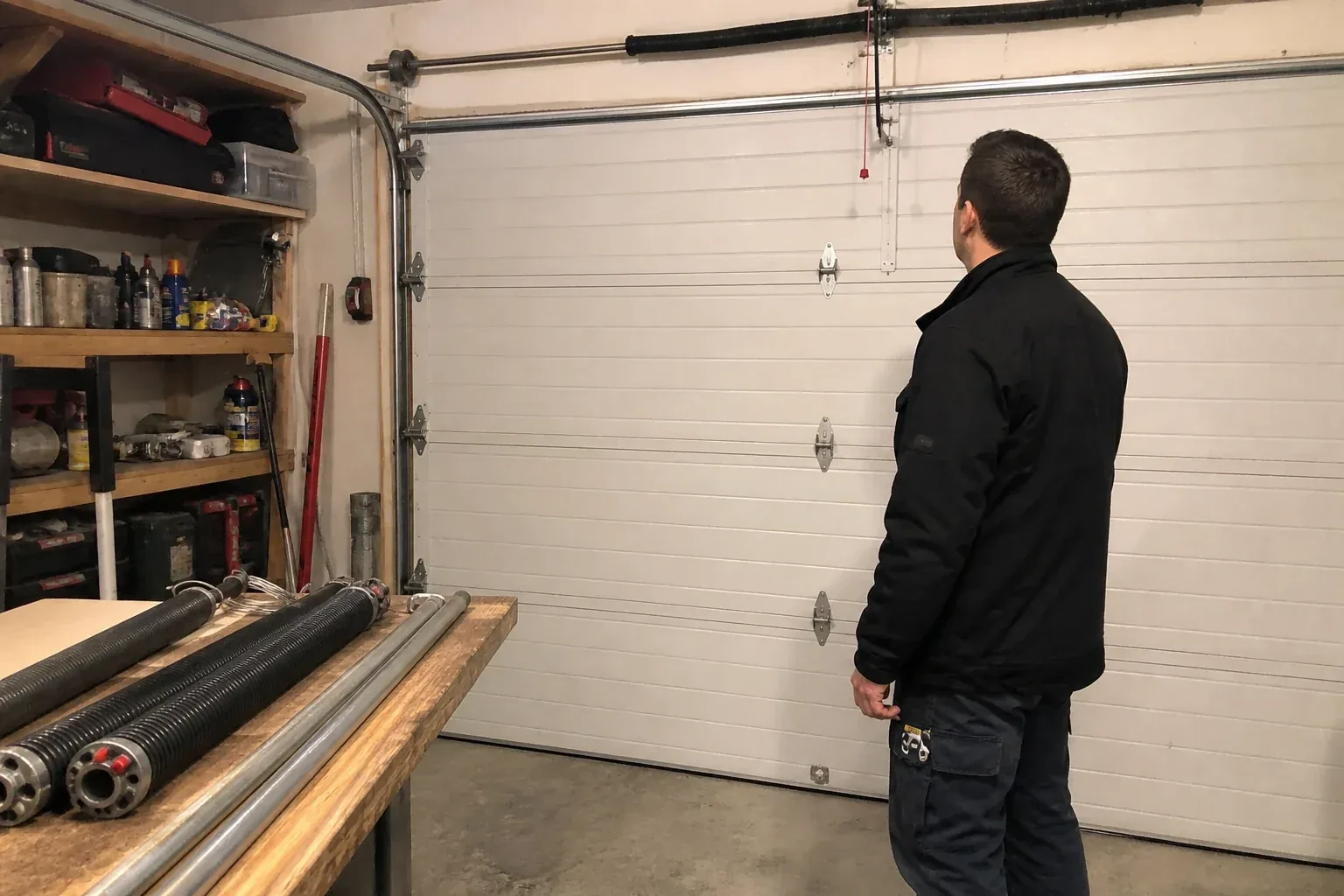
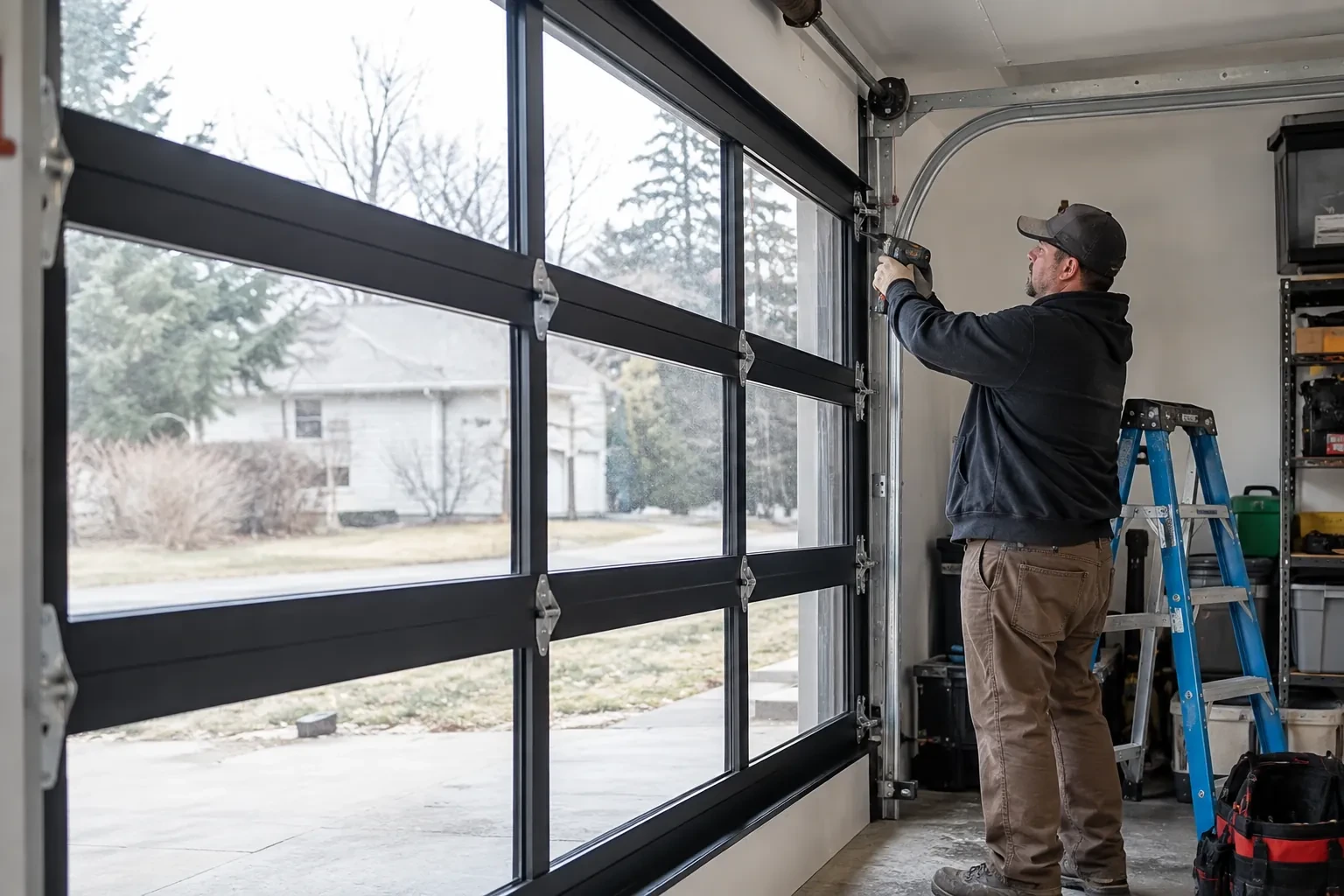
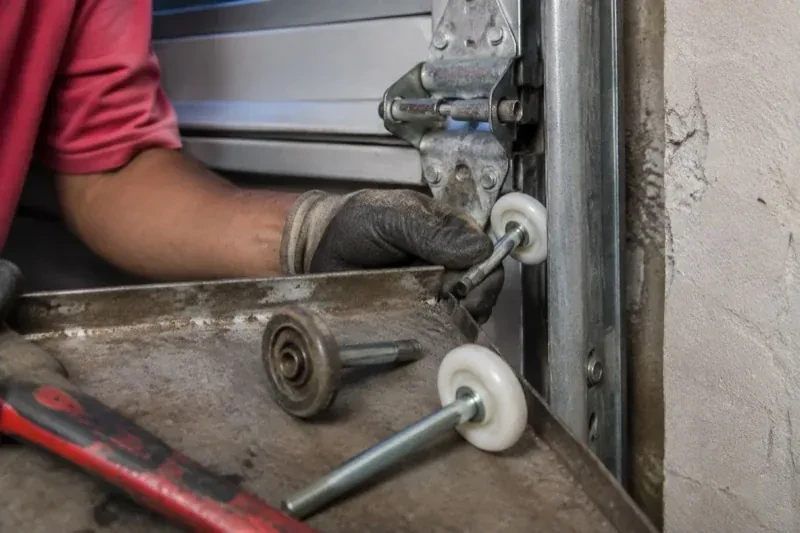
Illustrative garage doors scene — Extension Spring Replacement, Orangeville

Springs · Orangeville

Extension Spring Replacement

The door climbs with the left corner ahead of the right, then twists as it turns into the ceiling track. Looking up, the spring on the right side is stretched longer than its partner, with daylight showing between the coils.

In plain words

Every extension spring should carry a containment cable, and replacement is the moment to make sure yours do. A containment cable runs through the centre of the spring and is anchored at both ends, to the rear hanger and to the bracket at the front of the track. It does no lifting; its purpose is to hold a spring that breaks so the pieces stay on the cable. Many older doors predate this practice, which a home inspection checklist checks for. When springs are replaced, new containment cables are fitted with them, which keeps a broken spring's pieces contained, not the door's weight, balance or safety.

Sound familiar?Orangeville

The call
The home inspector's report on the house you are buying flags the garage door: extension springs with no safety cable running through them, coils showing rust, and a door that sank when he lifted it partway. The seller has never had it looked at.
NextHow the visit goes

Extension Spring Replacement · Orangeville

How the visit goes

Illustrative garage doors scene
  1. Scene 1

    Securing the door with the springs slack

    An extension spring is stretched tight when the door is closed and nearly relaxed when the door is fully open, so the first move is to get the door up. The technician pulls the opener's release, raises the door by hand if it will go, and clamps both vertical tracks below the bottom rollers so the door cannot come down. If a broken spring has left the door stuck partway, it is lifted and supported with the weight taken on clamps and props before anything else is handled. With the door held open, the springs, pulleys and hooks can be examined and removed like ordinary hardware, which is the whole reason the sequence begins this way.

  2. Scene 2

    Bringing the opener back into step

    The opener is the last thing touched. Once the door balances by hand, the trolley is reconnected and the door run through several full cycles under power while the technician watches the cables ride their pulleys and the springs stretch evenly. Because the door is now lighter to move than it was on tired springs, the opener's force and travel settings are reset to suit; a force setting left high would push a balanced door too hard. Then the reversal checks are done in front of you: a block laid flat under the centre of the door, which the door must touch and reverse from, and a hand passed through the photo-eye beam while the door closes.

  3. Scene 3

    Checking the balance yourself

    You can confirm the springs are still doing their share without going near them. With the door closed and nobody in the opening, pull the opener's red release cord so the trolley lets go of the door. Lift the door by its handle to roughly hip height and take your hands away. A door on good springs stays about where it is; if it sinks to the floor the springs have weakened, and if it rises on its own they are pulling harder than the door weighs. Either way it is a call rather than a job for you. Reconnect the opener the way your manual describes, usually by running it once.

In the van

  • Containment (safety) cables
  • S-hooks and adjusting clips
  • Lag screws and hanger bolts
  • Rear spring hangers and angle iron
  • Track clamps or locking pliers

What shapes the quoteHockley Valley Garage Door Experts

One spring per side or two
Heavier doors sometimes carry a pair of springs on each side rather than one. Four springs, four containment cables and the extra setting time show as their own lines.
Opener adjustment and testing
Resetting the opener's force and travel to the newly balanced door and running the reversal tests is a short task that the quote names when it applies.
Door weight and size
Spring rating follows the door's weight, and a wide insulated door or a wood door takes heavier springs than a light single. Weight and height together set the parts on the quote.

FeesSame any hour

Have it ready

Before you call · 0 / 3

(226) 917-2730

What people ask us

Would a stronger spring make the door easier to lift?

Not in a useful way. The aim is a spring that matches the door's weight, so the door holds still wherever you leave it. A spring rated above that weight pulls the door up on its own, makes it hard to close, and leans on the opener to hold it down. A spring rated below lets it sink. Matched springs, set to the same hook position, give the light, even feel you want.

What happens during the visit?

The technician releases the opener, opens the door fully and clamps it so the springs go slack, then inspects springs, pulleys, cables, hangers and containment cables and weighs the door. The old springs come off, a matched pair goes on with containment cables through them, the lift cables are routed over the pulleys and the two sides are set to matching hook positions. The door is balanced by hand, the opener reconnected and its reversing tested with you watching.

What are the early signs that the springs are wearing out?

The door starts to feel heavier when lifted by hand and the opener sounds as though it is working harder. Released from the opener, the door sinks from halfway instead of holding. With the door open, gaps show between coils that used to sit tight together, or one spring hangs longer than the other. Rust bloom on the coils and a squeal from a pulley round out the list. Any of these is a good time to call.

Orangevilleinformation

DufferinOntario

Town
Orangeville, Dufferin
In business
32 years
Hours
Open 24/7
Nights, weekends and holidays, same fees
Visits
On-site assessment preferred. Request a visit or call.

2021 census: what it means at the door

Every square is one home in a hundred.

  • 42 in 100 homes · mixed ages
  • About 42% of homes in Orangeville were built in 1980 or earlier, according to the 2021 Census.Where housing is mixed, so are garage sizes: single doors on older lots, double doors on infill and newer builds. Spring pairs, cable lengths and opener strength are all sized to the actual door, and we carry the range to cover whichever door is in front of us.
  • Single-detached houses make up about 60% of homes in Orangeville (2021 Census).A mixed neighbourhood is where weatherproofing varies most. A detached garage with an old, uneven apron needs a thicker bottom seal; a newer townhouse door mostly needs a cracked section of seal replaced. We look at how each door meets its floor and fit what closes the gap.

Source: Statistics Canada, Census Profile

Open Orangeville in Google Maps

On-site assessment

Request a visit.

The door climbs with the left corner ahead of the right, then twists as it turns into the ceiling track.

(226) 917-2730, open 24/7.