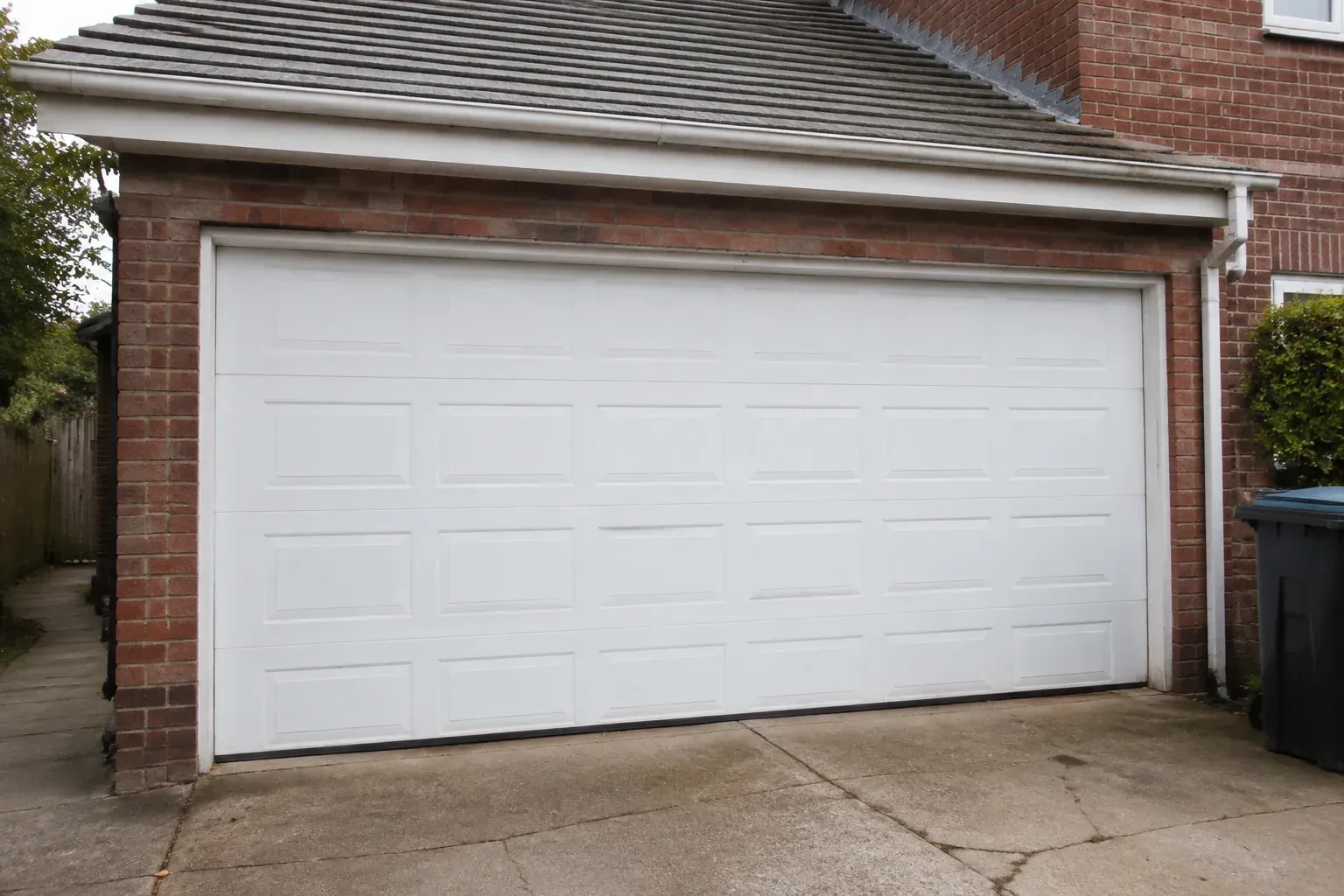
Garage Doors in Orangeville, OntarioMeasured twice. Fitted once.
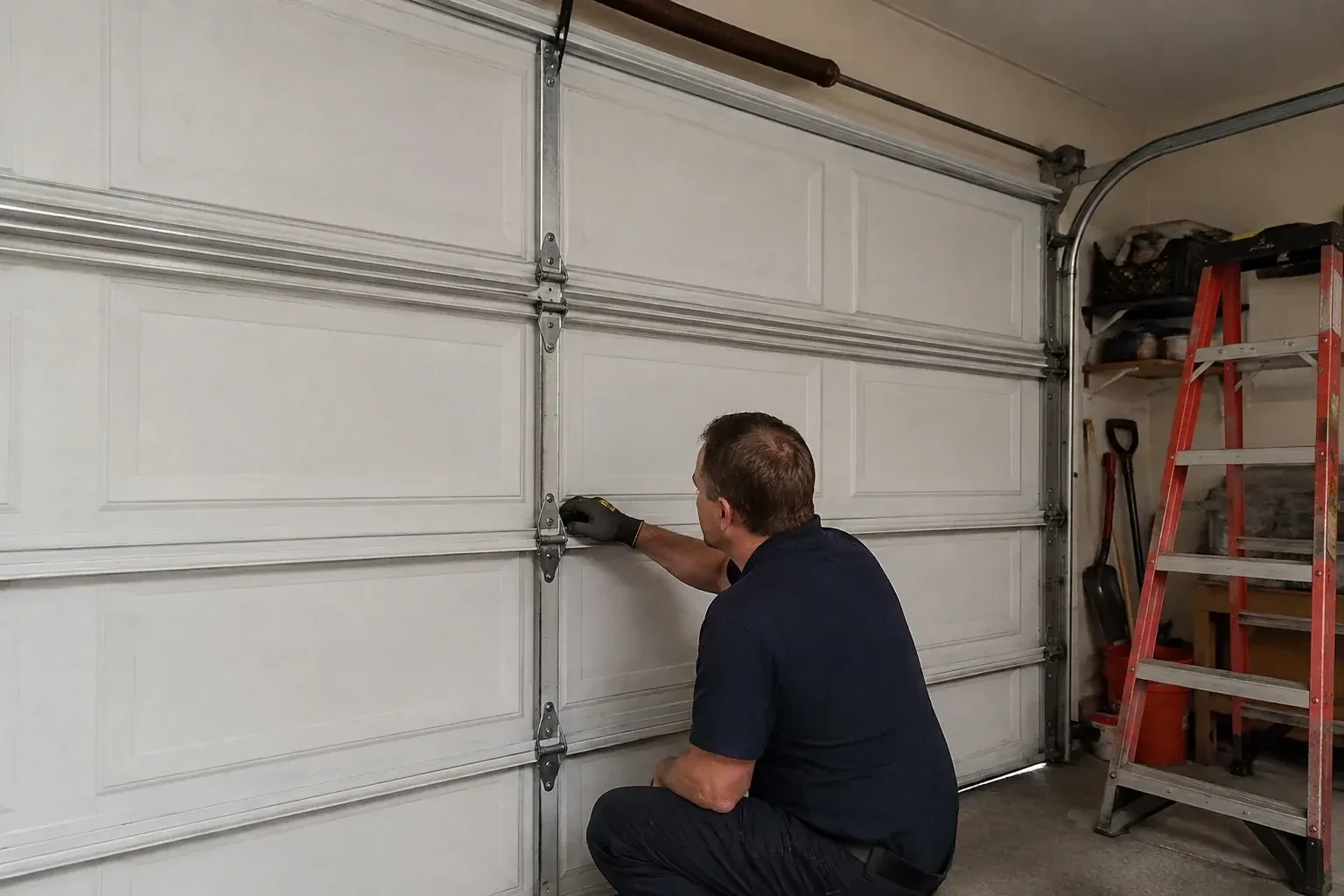
A new door has to match the opening, the headroom and the side room, or it will never run cleanly. We measure all of those before ordering, check the framing and the floor, and set the tracks plumb so the door seals evenly.
A garage door is the largest opening in most homes, and the gaps around it add up. We fit bottom seals sized to the floor's unevenness, perimeter weatherstrip that meets the door face squarely, and threshold seals where water tends to run in. The garage stays drier, and rooms that share a wall with it stay warmer.
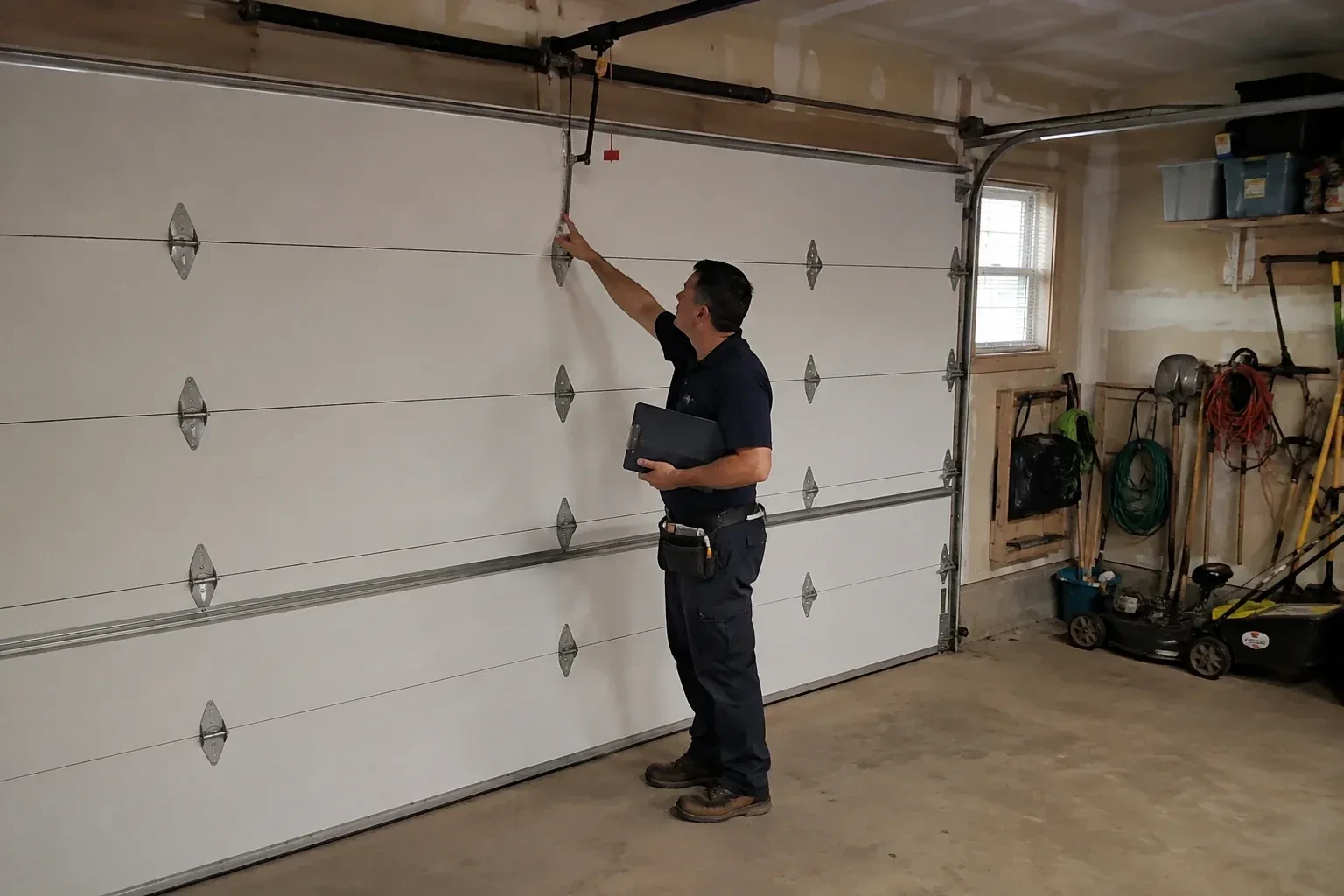
Garage doors rarely fail all at once. They give hints first, and this list is arranged around those hints. Match the one you have noticed and you will see what the visit involves and which parts are usually behind it.
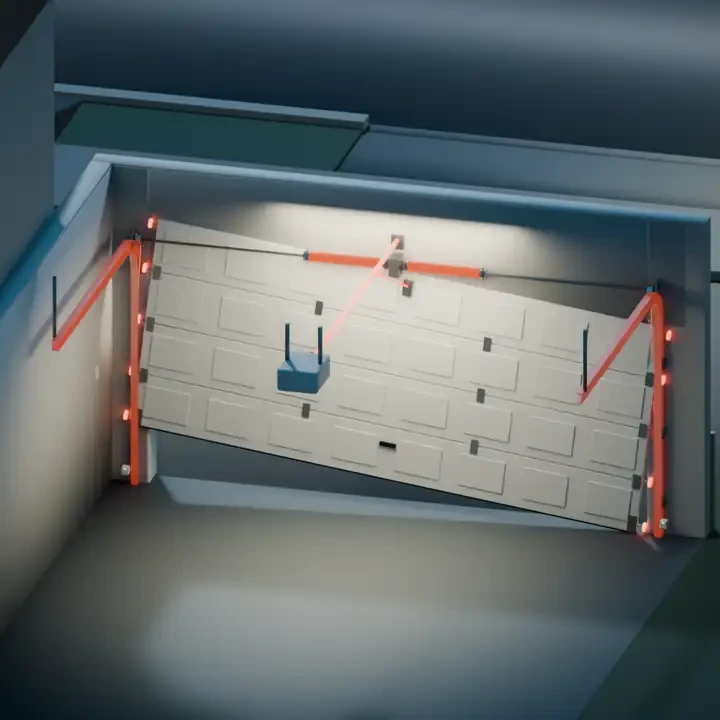
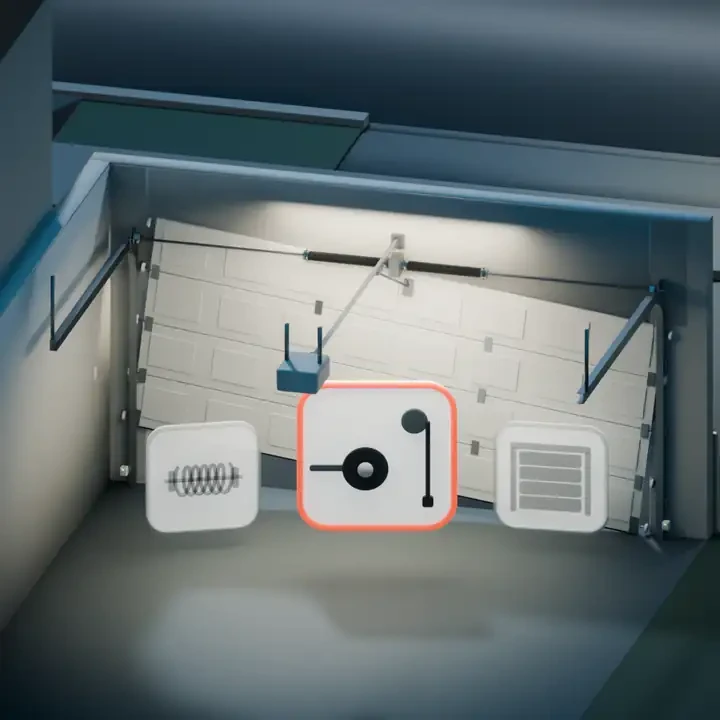
Springs & HardwareWhen a cable jumps its drum, the door tilts and jams in the track.
Springs & Hardware
When a cable jumps its drum, the door tilts and jams in the track.
The largest moving part of your home. Worth a closer look.
A garage door belongs to the architecture. Its movement belongs to your everyday life. We bring both into the conversation.
Job sheet1 of 3
Off-Track Garage Door Reset
The call
You tapped the door with the bumper while backing in, barely a nudge, and now the bottom corner has swung inward. One roller is dangling outside the rail, the section is twisted, and the door will neither rise nor settle flat.
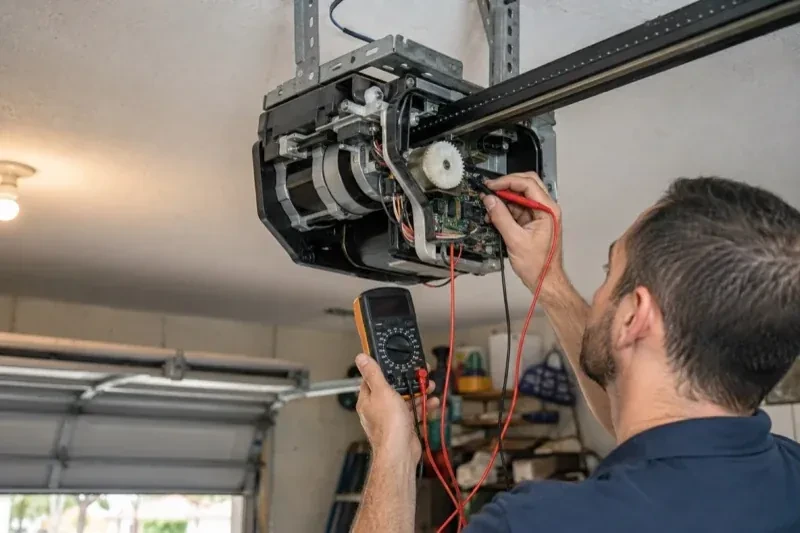
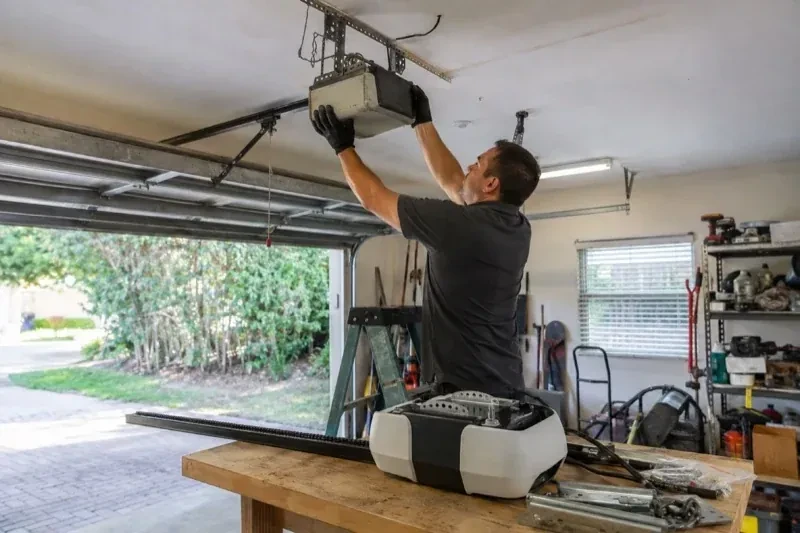
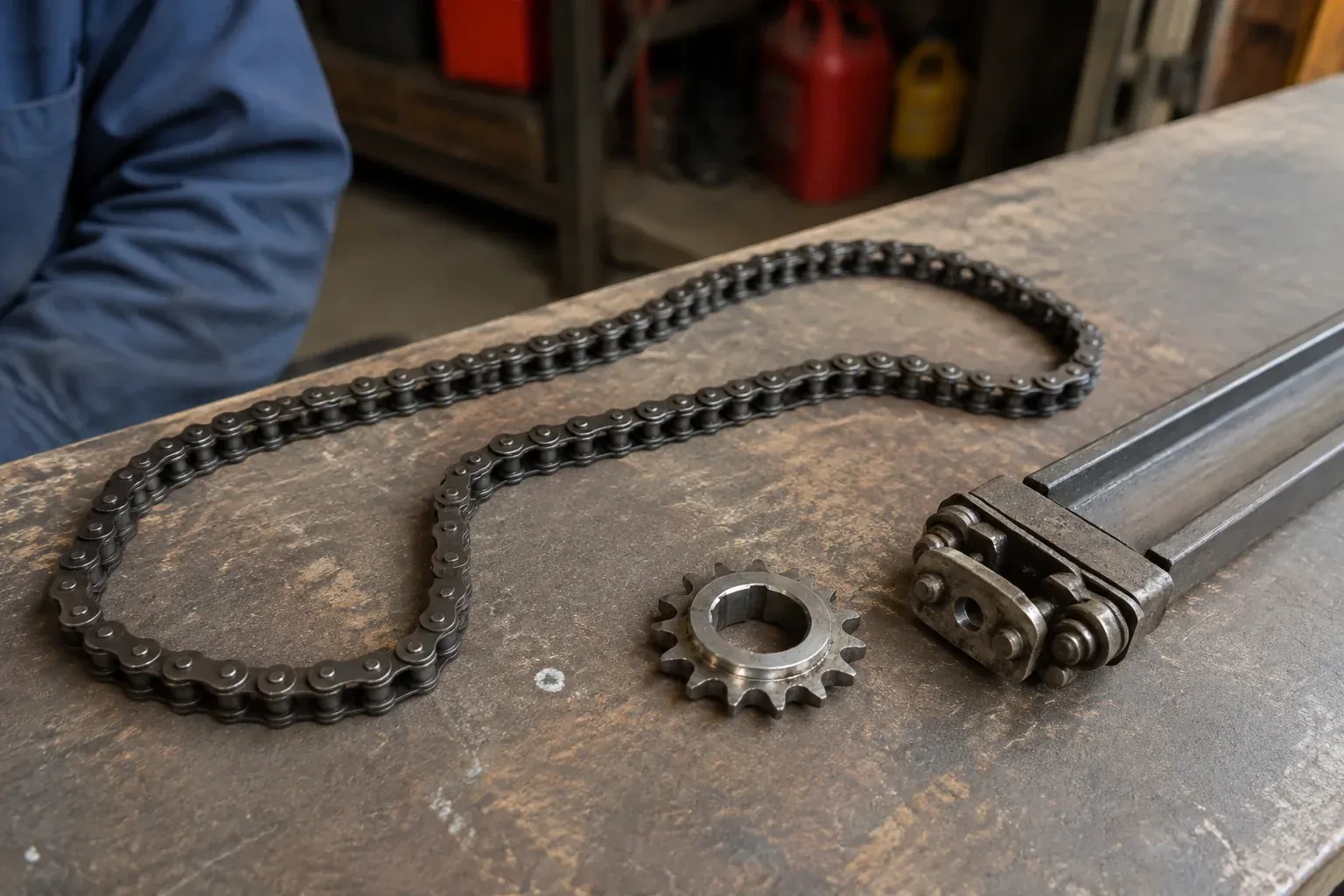
Press the button and the motor hums, but the door stays exactly where it is. Under the housing there is a dusting of white plastic shavings, the sign of a stripped drive gear, and this is the second time it has happened.
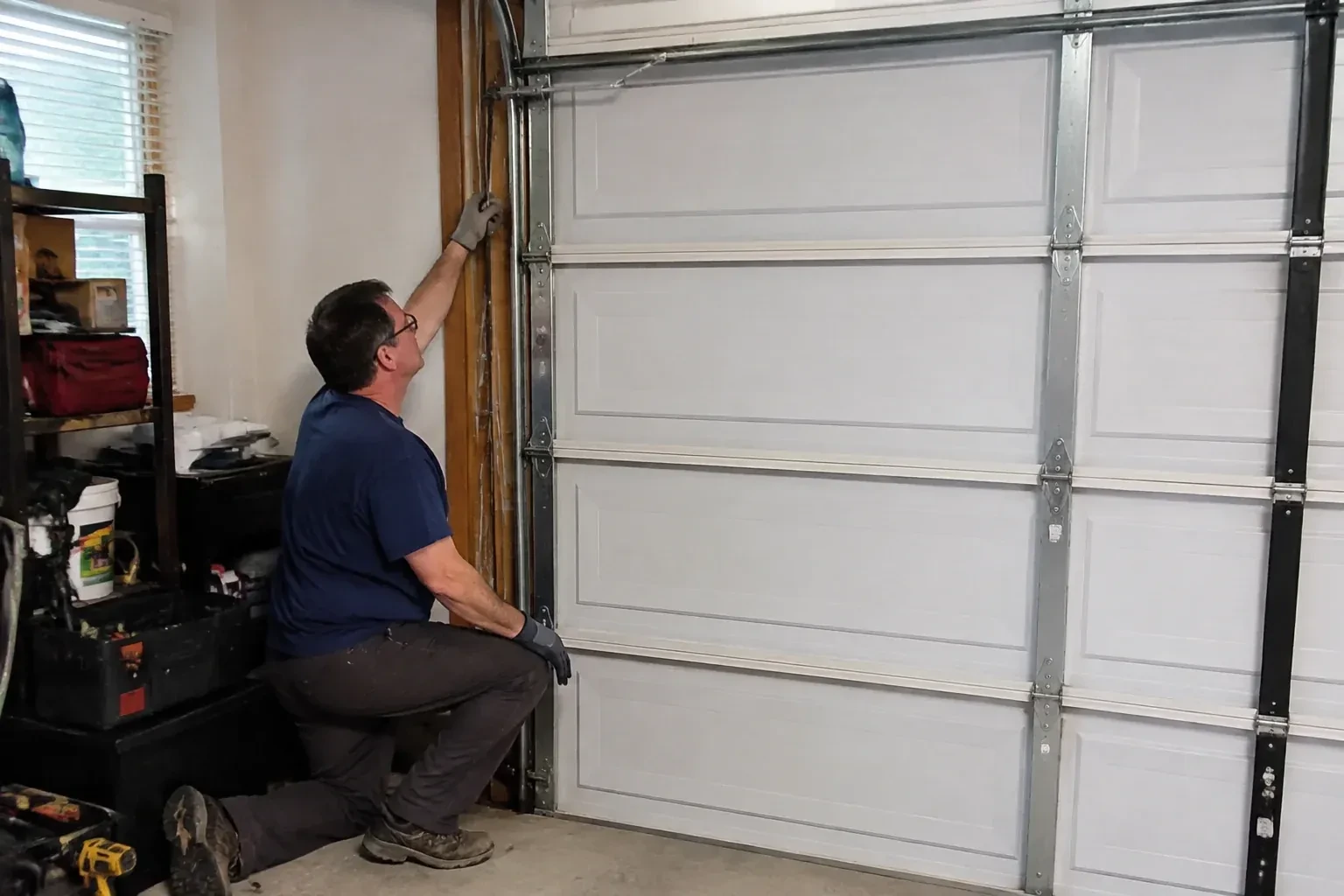
After years of slushy winters the cables look thinner near the bottom brackets, with rust streaks running down the door where they attach. The door still works, but the frayed wires catch your glove when you brush past.
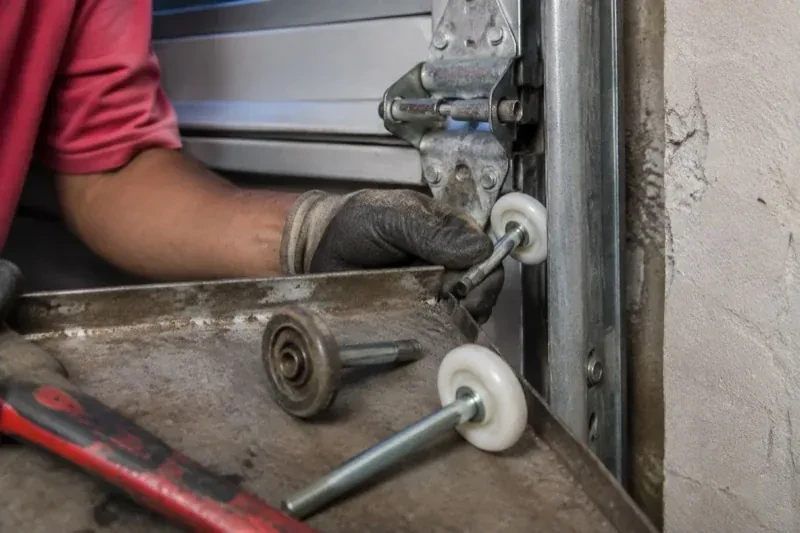
When a cable jumps its drum, the door tilts and jams in the track. Putting it back is only half the job: we look for the slack, the worn roller or the frozen seal that caused it, so it stays on.
The door starts to rise, gets about the height of your knee, then shudders and reverses. The opener sounds strained, and the top section flexes as the trolley pulls on it, because the motor is doing work the spring used to do.
Someone left the snow shovel leaning in the opening and the door came down on it. Now a loop of steel cable hangs loose beside the track and the door refuses to close the last few inches.
Since the cold snap the door has been stiff and noisy first thing, and after the last thaw the bottom corner began to judder. There is slush in the foot of the track and a bloom of rust on the lowest wheel.
Openers are sized to doors. A heavy insulated door on a light-duty motor will wear it out early, and a small single door does not need the largest unit made.
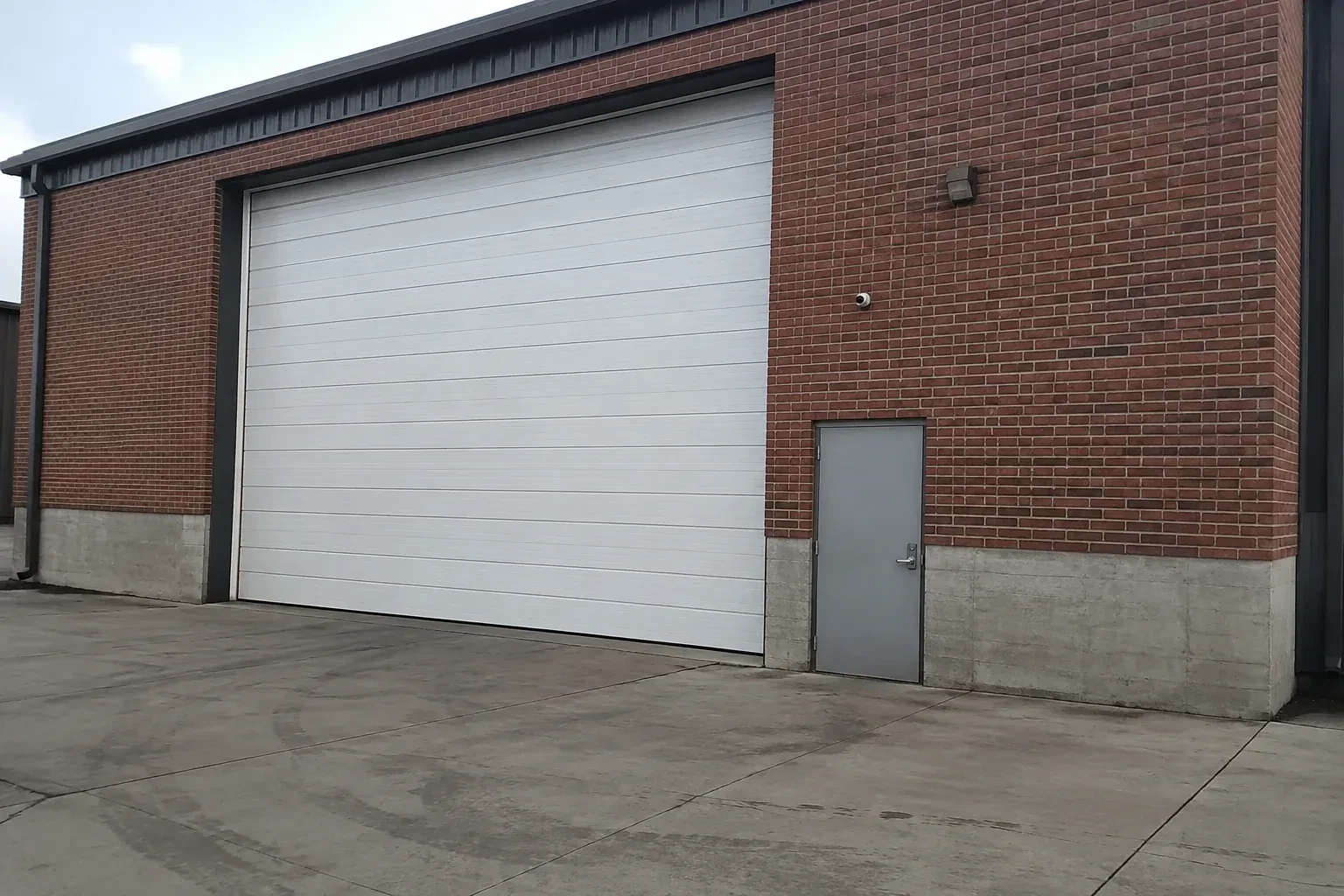
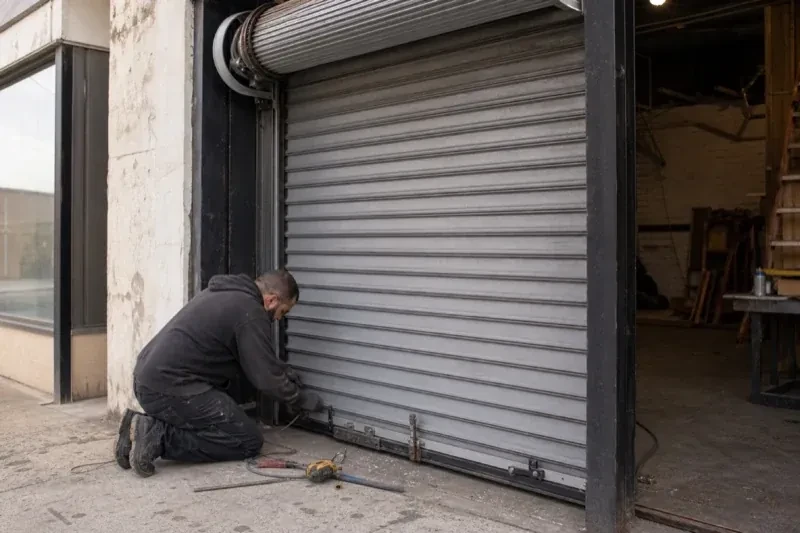
Doors for detached garages, workshops and outbuildings have their own needs: security, weather resistance and often a wider or taller opening. We install doors sized and built for those spaces rather than adapting a house door.
A garage door is the largest opening in most homes, and the gaps around it add up. We fit bottom seals sized to the floor's unevenness, perimeter weatherstrip that meets the door face squarely, and threshold seals where water tends to run in.
Scene 1 of 5
Call and describe the door
On our way
Straight talk about the door
Respectful, careful work
Time to decide
Step 1 of 5
Call and describe the door
Describe the property, the hardware and what has changed, and the visit starts from what you have seen.
Step 2 of 5
On our way
A new noise, a hesitation, a gap at the bottom. Small observations point us to the right part before we even arrive.
Step 3 of 5
Straight talk about the door
If a door has years left, we say so. If it is closer to the end, we say that too, and explain how we can tell.
Step 4 of 5
Respectful, careful work
We treat the garage as part of your home, protecting what is stored there and cleaning up completely afterwards.
Step 5 of 5
Time to decide
Nobody is rushed. You get the information, ask your questions, and we go ahead only when you are ready.
About 42% of homes in Orangeville were built in 1980 or earlier, according to the 2021 Census.Where housing is mixed, so are garage sizes: single doors on older lots, double doors on infill and newer builds. Spring pairs, cable lengths and opener strength are all sized to the actual door, and we carry the range to cover whichever door is in front of us.
Single-detached houses make up about 60% of homes in Orangeville (2021 Census).A mixed neighbourhood is where weatherproofing varies most. A detached garage with an old, uneven apron needs a thicker bottom seal; a newer townhouse door mostly needs a cracked section of seal replaced. We look at how each door meets its floor and fit what closes the gap.
Hockley Valley Garage Door Experts(226) 917-2730 · open 24/7
Should I lubricate the chain, the rail or the track?
Rollers, hinges, bearings and springs benefit from a garage door lubricant once or twice a year. The chain, belt or screw-drive rail is a separate question, since each drive type calls for its own product and schedule from the opener's manual rather than one rule for every unit. The track itself should stay clean and dry, because lubricant there collects grit and makes rollers slide instead of turning. The technician can point out the spots on your door at the end of the visit.
The motor hums but the door stays put. What is usually wrong?
A hum with no movement means the motor is receiving power but something is stopping it turning, or stopping its turn from reaching the door. On AC units a failed start capacitor is the common cause; on chain-drive heads a stripped nylon drive gear is the other. Less often the trolley has simply been released from the carriage. Each of these is a routine repair once identified, and the hum is one of the more helpful sounds an opener makes.
There are white plastic shavings under the opener. What are they?
Teeth from the drive gear. Many chain-drive openers use a nylon gear between the motor and the sprocket, and after years of running, especially against a heavy or dry door, its teeth shear off and fall as fine white curls onto whatever is parked below. The motor then spins without moving the chain. The gear and sprocket are replaced as a kit, and the door balance is checked so the new gear is not asked to carry the same load.
How can I tell if my springs are wearing out before they break?
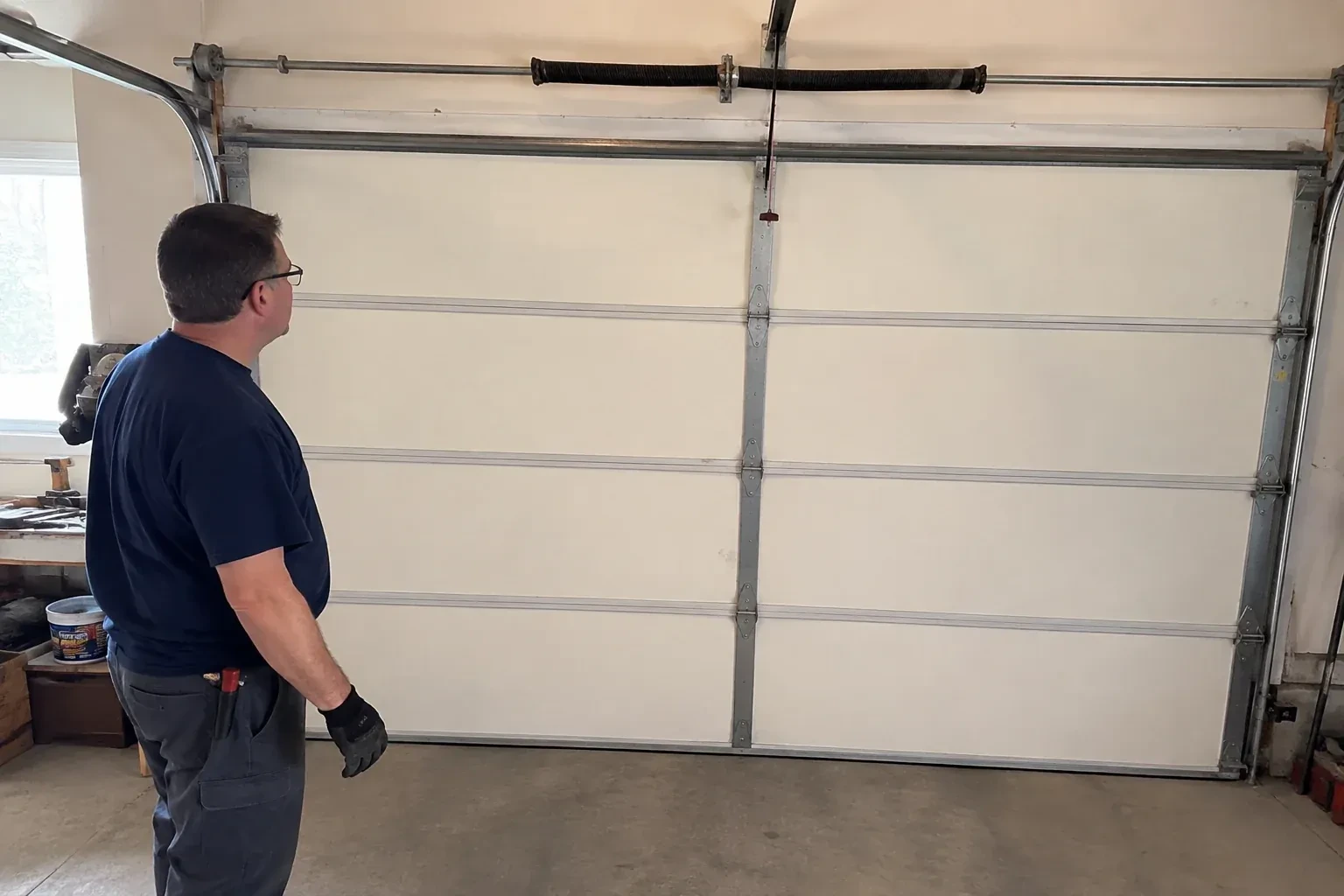
Watch for a door that feels heavier by hand when the opener is released, an opener that strains or slows, a door that drops the last stretch rather than settling, or one that drifts down when stopped halfway. Visually, look for stretched gaps between coils, rust streaks or pitting on the steel, and any sag in the shaft. A balance check when you notice these lets you plan a replacement rather than react to one.