Hockley Valley Garage Door ExpertsBulletin 1 of 3Orangeville, Ontario
Garage Door Panel Replacement: inside the visit
Trade guidance treats a garage door as a system: sections, hinges, rollers, tracks, cables, springs and opener all depend on one another, and an impact on one section rarely stops there.
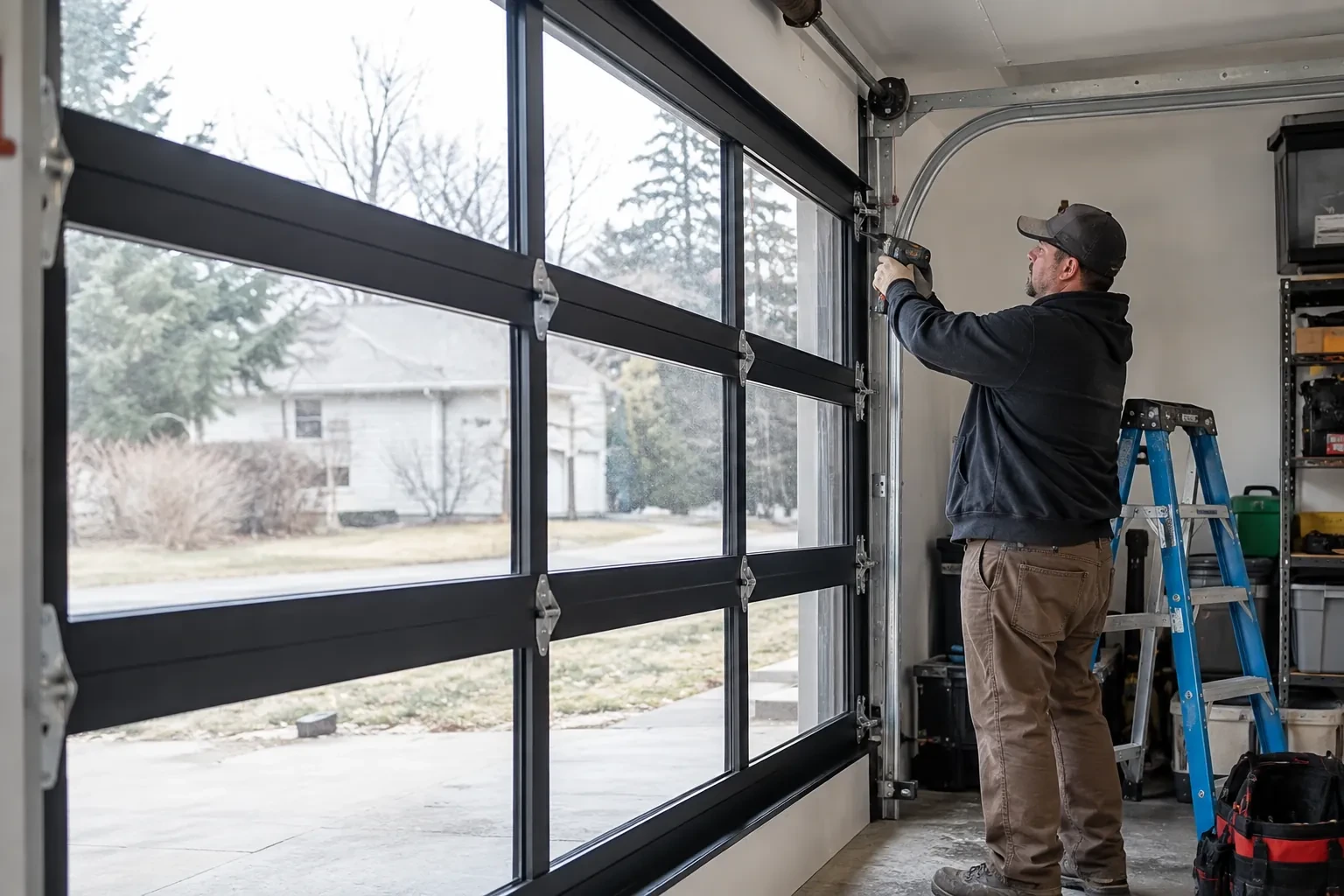
Trade guidance treats a garage door as a system: sections, hinges, rollers, tracks, cables, springs and opener all depend on one another, and an impact on one section rarely stops there. That is why a section replacement includes checking what the damage did to everything connected to it. A bent hinge is replaced, a roller that jumped is checked for a flat spot, a track bracket that shifted is reset, and the spring balance is re-measured with the new section's weight in place. The section is the visible part of the repair; the alignment and balance work around it are what make the door run true again.
What the impact did to everything else
Trade-association guidance is clear that after a vehicle strike, a storm or a freeze-up the whole door is looked at, not just the dented part. The technician runs a hand along the hinges for cracks and pulled screws, spins each roller for flat spots and bent stems, sights down both tracks for kinks and checks the brackets that hold them to the jambs. Cables are inspected for fraying where they wrap the drums, spring anchors and the centre bearing plate are checked, and the opener arm and its bracket are examined for bending. Anything the impact disturbed goes on the list alongside the section.
Re-tensioning and balancing the door
A replaced section can weigh a little more or less than the one that came out, especially when insulation or glazing differs, and the springs are set to the door as it now is. With the opener still disconnected, the technician winds the torsion spring to specification or rehangs the extension springs, then lifts the door by hand. A balanced door stays put around waist height, drifts neither up nor down, and moves through its travel with steady, even effort. Adjustments are made a quarter turn at a time until that is true, and the cables are checked for equal tension on both drums.
A record of the door for next time
You leave with the door's identity written down: manufacturer, model or series, section height and thickness, panel design, colour code and the position of the section that was replaced. Keep it with the house papers or photograph it and file it on your phone. The next time a section, a hinge or a set of rollers is needed, that record turns a search into a straightforward order. It also tells any future technician what has already been changed and when, which helps them judge the rest of the door's age and condition without guessing.